


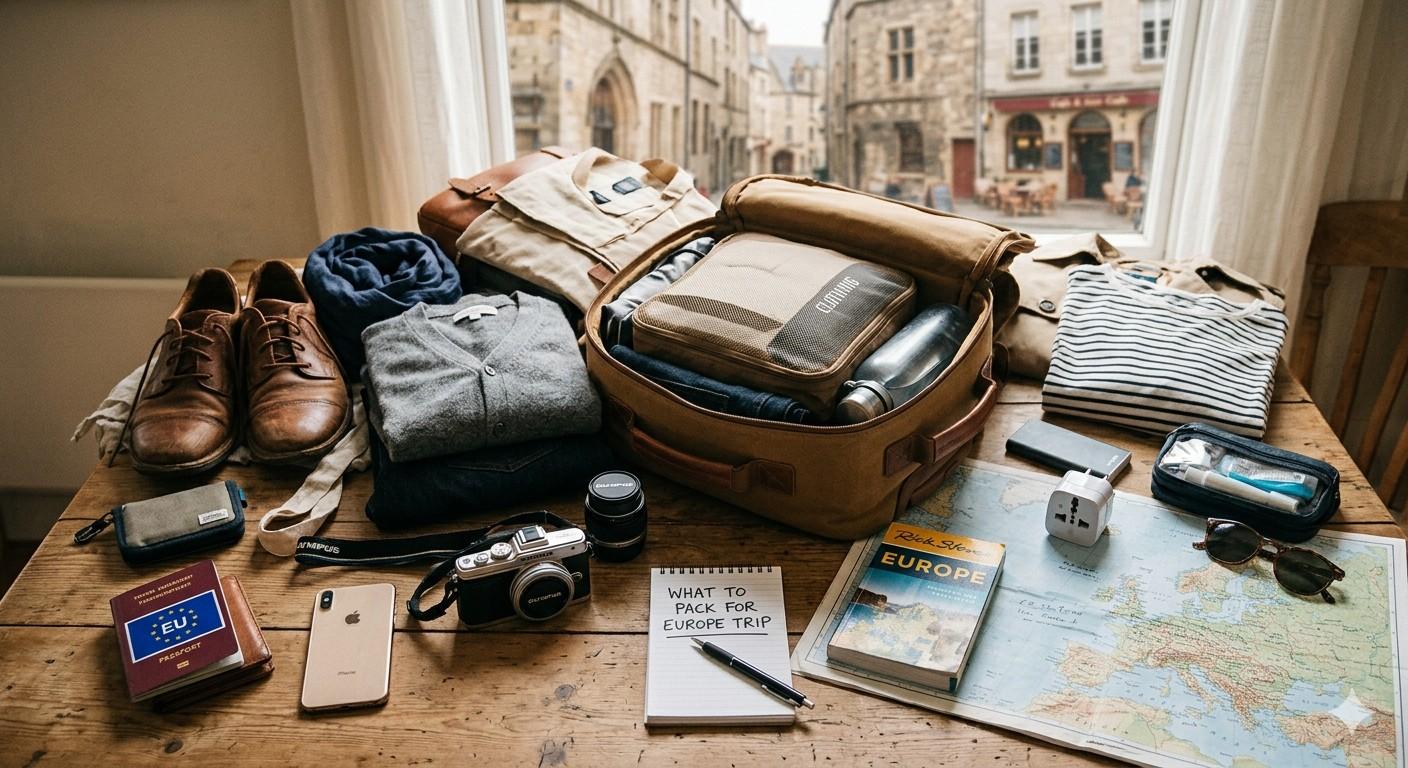
Packing for Europe sounds easy until you realize one trip can include rainy mornings in Amsterdam, sunny afternoons in Italy, and chilly evenings in Switzerland.
That’s why knowing exactly what to pack for a European trip is so important.
Many travelers overpack, bring the wrong shoes, or forget essentials like adapters and weather layers. The result? Heavy luggage, sore feet, extra expenses, and unnecessary stress.
This guide solves that problem.
You’ll learn how to pack light, stay comfortable, dress appropriately for different European destinations, and avoid common packing mistakes. Whether you’re backpacking across Europe, taking a luxury vacation, or planning a two-week city-hopping adventure, this packing list covers everything you actually need.
Recent travel guides and experienced travelers consistently recommend versatile clothing, lightweight layers, and carry-on-friendly packing strategies for Europe trips.
Why Packing Smart for Europe Matters
Europe is different from many other travel destinations.
You’ll likely walk more than expected, move between multiple cities, use trains frequently, and deal with changing weather. Cobblestone streets, compact hotel rooms, and airline baggage limits make heavy luggage a real burden.
Experienced travelers now recommend the “pack for one week” strategy, even for longer trips, because laundry facilities are widely available across Europe.
The goal is simple:
- Pack lighter
- Choose versatile items
- Prioritize comfort
- Leave extra room for souvenirs
Essential Travel Documents for Europe
Before thinking about clothes or shoes, organize your travel essentials.
Must-Have Documents
Carry these items in your personal bag or backpack:
- Passport with at least 6 months’ validity
- Schengen visa (if required)
- Travel insurance documents
- Flight tickets and hotel confirmations
- Emergency contact information
- Credit and debit cards
- Some local currency (Euros or regional currencies)
- Digital and printed copies of important documents
Travel experts strongly recommend storing copies of your passport and insurance online for backup access.
Pro Tip
Use a small RFID-blocking travel wallet to keep everything organized and secure.
What Clothes to Pack for a European Trip
Pack Versatile Layers Instead of Bulky Outfits
The best European travel wardrobe is built around layering.
Weather changes quickly across Europe, even during summer. Instead of packing heavy clothing, choose lightweight layers you can mix and match. Multiple travel guides emphasize layering as the smartest strategy for European travel.
Recommended Clothing Checklist
Tops
- 4–6 t-shirts or casual tops
- 2 long-sleeve shirts
- 1 sweater or cardigan
- 1 nicer outfit for dinners or events
Bottoms
- 2 pairs of jeans or travel pants
- 1 pair of comfortable shorts or skirts
- 1 pair of leggings or joggers
Outerwear
- Lightweight waterproof jacket
- Compact umbrella
- Scarf for layering
Undergarments
- 7 pairs of underwear
- 5–7 pairs of socks
- Sleepwear
Choose neutral colors so everything matches easily.
Best Shoes for Europe Travel
Your Shoes Can Make or Break Your Trip
One of the biggest mistakes travelers make is bringing uncomfortable shoes.
European cities involve a lot of walking, stairs, and uneven cobblestone streets. Nearly every top packing guide highlights broken-in walking shoes as the number one essential.
Best Footwear for Europe
Bring:
- Comfortable walking sneakers
- Waterproof shoes for rainy days
- Sandals or flip-flops (summer)
- One dressier option if needed
Avoid:
- Brand-new shoes
- Heavy boots unless visiting in winter
- High heels for everyday sightseeing
How Many Shoes Should You Pack?
Most travelers only need two pairs:
- Comfortable walking shoes
- Lightweight secondary pair
That’s it.
What to Pack for a European Trip in Different Seasons
Summer Packing List for Europe
Summer in Europe can be hot, especially in Spain, Italy, Greece, and Portugal.
Summer Essentials
- Lightweight breathable clothing
- Sunglasses
- Sunscreen
- Hat or cap
- Reusable water bottle
- Comfortable sandals
Remember that many churches and religious sites require covered shoulders and knees.
Winter Packing List for Europe
Winter temperatures vary greatly depending on the country.
Northern and Central Europe can be extremely cold, while Southern Europe remains milder.
Winter Essentials
- Thermal layers
- Warm waterproof coat
- Gloves
- Wool socks
- Beanie or winter hat
- Waterproof boots
Instead of packing oversized winter jackets, wear your heaviest coat during flights to save luggage space.
Spring and Fall Packing Tips
Spring and autumn are unpredictable across Europe.
You may experience sunshine, rain, and cold wind on the same day.
Best Items for Transitional Weather
- Layered outfits
- Light sweater
- Waterproof jacket
- Compact umbrella
- Comfortable closed shoes
Toiletries and Personal Care Essentials
Many travelers overpack toiletries.
European pharmacies and supermarkets are excellent, so you only need the basics.
Toiletry Checklist
- Toothbrush and toothpaste
- Shampoo and conditioner
- Deodorant
- Skincare products
- Prescription medication
- Pain relievers
- Sunscreen
- Lip balm
- Small first-aid kit
Carry-On Liquid Rules
If flying with carry-on luggage:
- Liquids must usually be under 100ml
- Store them in a clear zip bag
Solid toiletries like shampoo bars help save space.
Electronics to Bring to Europe
Don’t Forget These Travel Tech Essentials
Different European countries use different power plugs, making adapters essential.
Electronics Packing List
- Universal travel adapter
- Phone charger
- Portable power bank
- Headphones
- Camera
- Laptop or tablet (if needed)
- Smartwatch charger
- E-reader or Kindle
Many experienced travelers now prioritize lightweight tech setups to reduce bag weight.
Should You Bring a Power Bank?
Absolutely.
Long sightseeing days, train rides, and navigation apps drain batteries quickly.
Best Bags and Luggage for Europe
Carry-On vs Checked Luggage
For most European trips, carry-on luggage is the smartest option.
You’ll move faster through airports, avoid baggage fees, and handle trains more easily.
Best Luggage Choices
Carry-On Suitcase
Best for:
- City vacations
- Hotel stays
- Short trips
Travel Backpack
Best for:
- Backpacking Europe
- Multi-city travel
- Budget travel
Backpack-only travel has become increasingly popular in Europe because it’s easier to manage on trains and crowded streets.
Smart Packing Tips Most Travelers Forget
Use Packing Cubes
Packing cubes help organize clothing and save space.
Many experienced travelers now use separate cubes for tops, electronics, underwear, and toiletries.
Roll Clothes Instead of Folding
Rolling:
- Saves space
- Reduces wrinkles
- Makes items easier to find
Leave Space for Shopping
Europe is famous for shopping.
Don’t pack your suitcase full before your trip.
Pack a Small Day Bag
A lightweight crossbody bag or anti-theft backpack is useful for:
- Day trips
- Museums
- Public transport
- Protecting valuables
What NOT to Pack for a European Trip
Overpacking is the most common mistake.
Here’s what you can usually leave behind:
- Too many shoes
- Full-size toiletries
- Expensive jewelry
- Heavy hair tools
- “Just in case” outfits
- Large towels
- Excess electronics
Most travelers wear only a small portion of the clothes they pack.
Sample Europe Packing List for 10 Days
Here’s a realistic minimalist packing example.
Clothing
- 5 tops
- 2 pants
- 1 shorts/skirt
- 1 sweater
- 1 waterproof jacket
- 7 underwear
- 5 socks
- 2 shoes
Essentials
- Passport
- Wallet
- Insurance
- Phone
- Adapter
- Chargers
- Power bank
Toiletries
- Toothbrush
- Mini skincare kit
- Medication
- Sunscreen
Extras
- Sunglasses
- Reusable water bottle
- Small umbrella
- Laundry bag
This setup easily fits into a carry-on suitcase or 40L backpack.
Common Europe Packing Mistakes to Avoid
Bringing Too Much Clothing
Laundry services are everywhere in Europe.
Pack lighter than you think you need.
Ignoring the Weather
Always check weather forecasts before departure.
Europe’s climate changes significantly by region.
Wearing Fashion Over Comfort
Stylish shoes won’t matter if your feet hurt after day two.
Comfort always wins.
Forgetting Travel Adapters
European outlets differ from those in many countries.
A universal adapter is essential.
FAQs About What to Pack for a European Trip
How many outfits do I need for a European trip?
For most trips, pack enough clothing for 7 days and plan to do laundry if traveling longer.
Should I carry cash in Europe?
Yes, but not too much. Cards are widely accepted, though some smaller shops still prefer cash.
Is carry-on luggage enough for Europe?
Yes. Many experienced travelers use only carry-on luggage for trips lasting several weeks.
What bag is best for European travel?
A lightweight carry-on suitcase or 35–45L backpack works best for most travelers.
What should I wear in Europe to avoid looking like a tourist?
Stick to simple, neutral, comfortable outfits. Europeans generally dress casually but neatly.
Conclusion
Knowing what to pack for a European trip doesn’t have to be stressful.
The secret is simple:
- Pack light
- Choose versatile clothing
- Prioritize comfort
- Bring only what you’ll actually use
A smart packing strategy gives you more freedom, less stress, and a much smoother travel experience.
Whether you’re exploring Paris, hiking in Switzerland, or hopping between cities by train, the right packing list helps you focus on what really matters: enjoying your trip.
Start with the essentials, avoid overpacking, and travel smarter from day one.
