


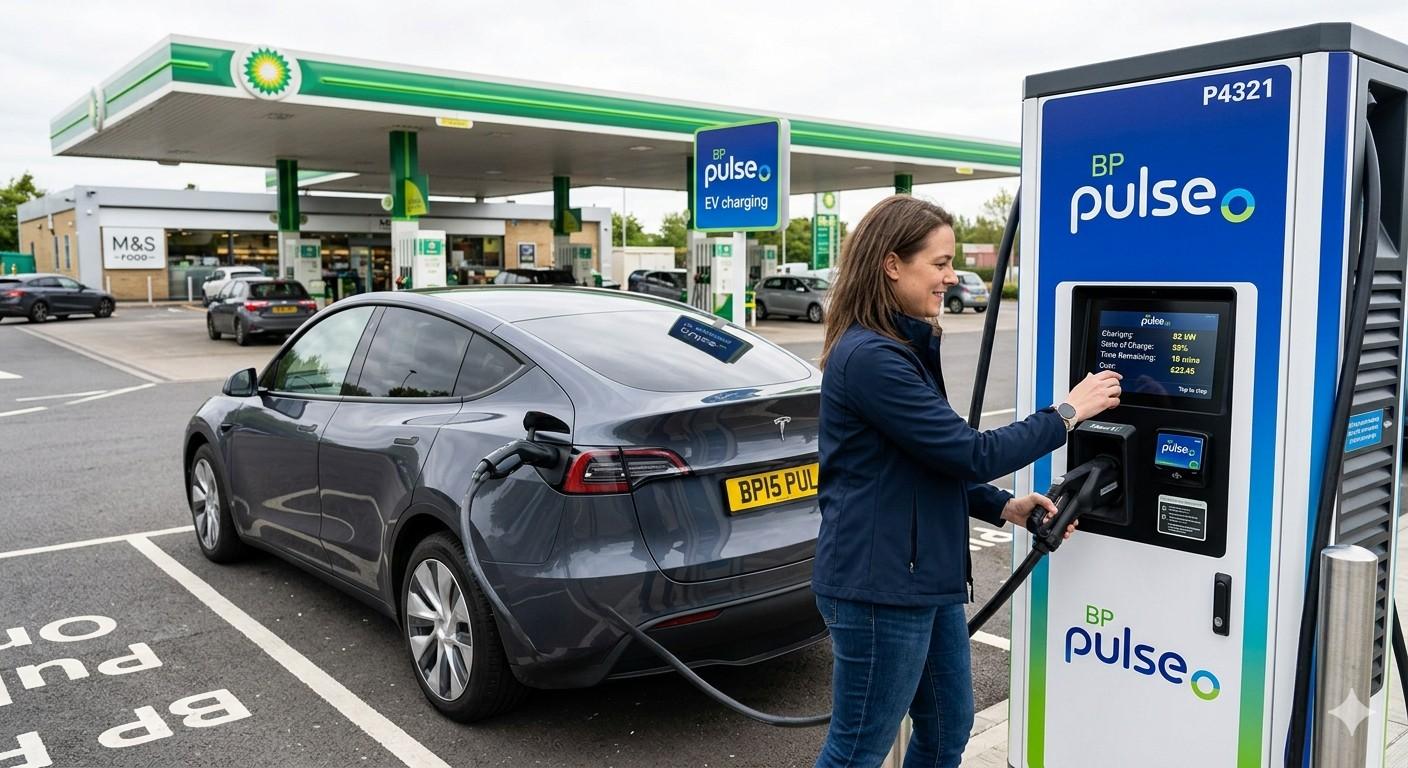
Electric vehicle adoption continues to grow worldwide, and reliable charging infrastructure has become more important than ever. If you’ve searched for a BP Pulse charging station, you’re likely looking for information about where to find one, how it works, how much it costs, and whether it’s a good option for charging your EV.
BP Pulse has evolved into one of the world’s leading EV charging networks, operating thousands of charging points across key markets including the UK, the United States, Germany, Australia, and other regions. The company continues expanding its network with ultra-fast charging hubs, airport charging facilities, retail partnerships, and highway charging locations.
This guide covers everything EV drivers need to know about using a BP Pulse charging station in 2026.
What Is a BP Pulse Charging Station?
A BP Pulse charging station is an electric vehicle charging point operated by BP Pulse, BP’s dedicated EV charging business.
The network offers:
- AC destination chargers
- Rapid DC chargers
- Ultra-fast DC chargers
- Public charging hubs
- Fleet charging solutions
- Business charging infrastructure
BP Pulse serves both individual EV drivers and commercial fleets. The company’s goal is to make EV charging as convenient as traditional refueling by placing chargers at strategic locations such as fuel stations, shopping centers, airports, hotels, and highway corridors.
Why BP Pulse Is Becoming a Major EV Charging Network
The EV charging market is highly competitive, with networks such as Tesla Supercharger, Electrify America, ChargePoint, Ionity, and Shell Recharge expanding rapidly.
However, BP Pulse has several advantages:
Extensive Global Expansion
BP Pulse continues investing heavily in EV infrastructure and has established operations across multiple countries. The company reached approximately 40,000 charging points globally and continues expanding in strategic markets.
Focus on High-Speed Charging
Many new BP Pulse charging stations feature:
- 150kW chargers
- 300kW chargers
- 400kW ultra-fast chargers at selected locations
These charging speeds can significantly reduce waiting times for modern EVs.
Convenient Locations
BP Pulse strategically places chargers where drivers naturally stop:
- BP fuel stations
- Airport charging hubs
- Retail centers
- Restaurants
- Highway travel centers
- Commercial parking facilities
This approach improves convenience during long journeys.
Types of BP Pulse Charging Stations
Not all chargers deliver the same charging speed.
Fast AC Chargers
Fast AC chargers are ideal for longer parking periods.
Typical power output:
- 7kW
- 11kW
- 22kW
Best for:
- Workplace charging
- Hotel parking
- Shopping trips
- Overnight charging
Rapid DC Chargers
Rapid chargers provide faster charging for drivers on the move.
Typical output:
- 50kW
- 75kW
Best for:
- Road trips
- Quick top-ups
- Urban charging
Ultra-Fast Chargers
Ultra-fast chargers represent the newest generation of EV infrastructure.
Power levels include:
- 150kW
- 300kW
- 400kW (selected locations)
Many newer BP Pulse charging stations focus on ultra-fast charging because modern EVs can add substantial range in a short period.
How to Use a BP Pulse Charging Station
Using a BP Pulse charging station is relatively straightforward.
Step 1: Find a Charger
Use the BP Pulse mobile app to:
- Locate nearby chargers
- View charger availability
- Check charging speeds
- Get navigation directions
The app provides real-time information that helps drivers avoid occupied chargers.
Step 2: Park and Connect
Once you arrive:
- Park in the designated charging bay.
- Select the appropriate connector.
- Plug the charging cable into your vehicle.
Step 3: Start the Charging Session
Depending on the location, you can start charging using:
- BP Pulse app
- RFID charging card
- Contactless payment
- Mobile wallet
Many modern sites support direct payment without requiring a subscription.
Step 4: Monitor Progress
The app allows drivers to:
- Track charging status
- View charging speed
- Estimate completion time
- Manage payments
Step 5: Disconnect and Continue Your Journey
When charging is complete:
- End the session.
- Disconnect the cable.
- Return the connector.
- Leave the charging bay for the next user.
BP Pulse Charging Station Costs
Pricing varies by country, charger type, and charging speed.
Generally, costs depend on:
- Energy consumed (kWh)
- Charger speed
- Membership status
- Location
For example, ultra-fast chargers typically cost more than standard AC chargers because they deliver energy much faster. The BP Pulse network commonly uses a per-kWh pricing structure.
Factors that affect pricing include:
- Peak demand periods
- Regional electricity costs
- Subscription discounts
- Government regulations
Always check current pricing in the BP Pulse app before charging.
Where Can You Find a BP Pulse Charging Station?
One of the most common questions is where to locate a BP Pulse charging station.
Urban Areas
Many chargers are installed in:
- City centers
- Public parking lots
- Retail destinations
- Office complexes
Highway Corridors
Long-distance travelers can find BP Pulse chargers along major transportation routes. The company continues expanding highway charging infrastructure to support growing EV adoption.
Airports
BP Pulse has invested in airport charging hubs that serve:
- Travelers
- Ride-share drivers
- Rental car fleets
Several airport-focused projects have been launched in recent years.
Retail and Restaurant Partnerships
The network increasingly partners with businesses that attract drivers for extended periods.
Examples include:
- Convenience stores
- Restaurants
- Shopping centers
- Travel plazas
These locations allow drivers to charge while completing everyday activities.
BP Pulse App Features
Real-Time Availability
One major frustration for EV drivers is arriving at occupied chargers.
The BP Pulse app helps by showing:
- Available chargers
- Busy locations
- Charger status
Route Planning
Many EV drivers use the app to plan longer journeys.
Payment Management
The app stores:
- Payment methods
- Charging history
- Receipts
- Session records
Charging Notifications
Drivers can receive alerts when:
- Charging begins
- Charging completes
- Issues occur during charging
These features improve the overall charging experience.
Advantages of Using a BP Pulse Charging Station
Fast Charging Speeds
Many newer locations offer ultra-fast charging capable of delivering a significant range quickly.
Growing Network
BP Pulse continues expanding globally, making it easier for EV drivers to find reliable charging options.
Convenient Amenities
Modern charging hubs often include:
- Restrooms
- Food options
- Coffee shops
- Wi-Fi
- Waiting areas
This makes charging stops more comfortable.
Multiple Payment Options
Drivers can often charge without subscriptions thanks to contactless payment support.
Potential Limitations to Consider
No charging network is perfect.
Some users report occasional challenges, such as:
- Charger availability during peak hours
- Pricing differences between locations
- Compatibility questions with certain charging cards
- Reliability variations at older sites
However, BP Pulse continues upgrading infrastructure and replacing legacy equipment with newer high-speed chargers.
Future of the BP Pulse Charging Station Network
The future looks promising for BP Pulse.
Key developments include:
Ultra-Fast Charging Expansion
New sites increasingly feature:
- 300kW chargers
- 400kW chargers
- High-capacity charging hubs
Airport Charging Hubs
Large-scale airport charging projects are becoming a major growth area.
Truck Charging Infrastructure
BP Pulse is investing in electric truck charging solutions along major freight routes.
More Retail Partnerships
Partnerships with travel centers and restaurants will make charging more accessible to everyday drivers.
FAQs About BP Pulse Charging Station
Is BP Pulse available outside the UK?
Yes. BP Pulse operates in multiple countries, including the United States, Germany, Australia, and other strategic EV markets.
Do I need a BP Pulse membership?
Not always. Many BP Pulse charging stations support contactless payment, allowing drivers to charge without a subscription.
How fast is a BP Pulse charging station?
Charging speeds vary by location and charger type. Options range from 7kW AC chargers to ultra-fast 300kW and 400kW DC chargers.
Can Tesla vehicles use BP Pulse chargers?
In many locations, Tesla vehicles can use BP Pulse chargers if the connector compatibility requirements are met.
How do I find the nearest BP Pulse charging station?
The BP Pulse mobile app is the easiest way to locate nearby chargers and check real-time availability.
Is BP Pulse good for long-distance travel?
Yes. The network increasingly focuses on rapid and ultra-fast charging locations positioned along major travel routes.
Conclusion
A BP Pulse charging station is becoming an increasingly important part of the global EV charging ecosystem. With a growing network of fast, rapid, and ultra-fast chargers, BP Pulse is helping make electric vehicle ownership more practical for everyday drivers.
Whether you’re planning a road trip, commuting daily, or simply looking for a reliable public charger, BP Pulse offers a combination of expanding coverage, modern charging technology, and convenient locations. As EV adoption accelerates through 2026 and beyond, the network is expected to play an even larger role in supporting electric mobility worldwide.
For the best experience, download the BP Pulse app, check charger availability before you travel, and take advantage of the growing number of high-speed charging hubs appearing across major transportation routes.
