


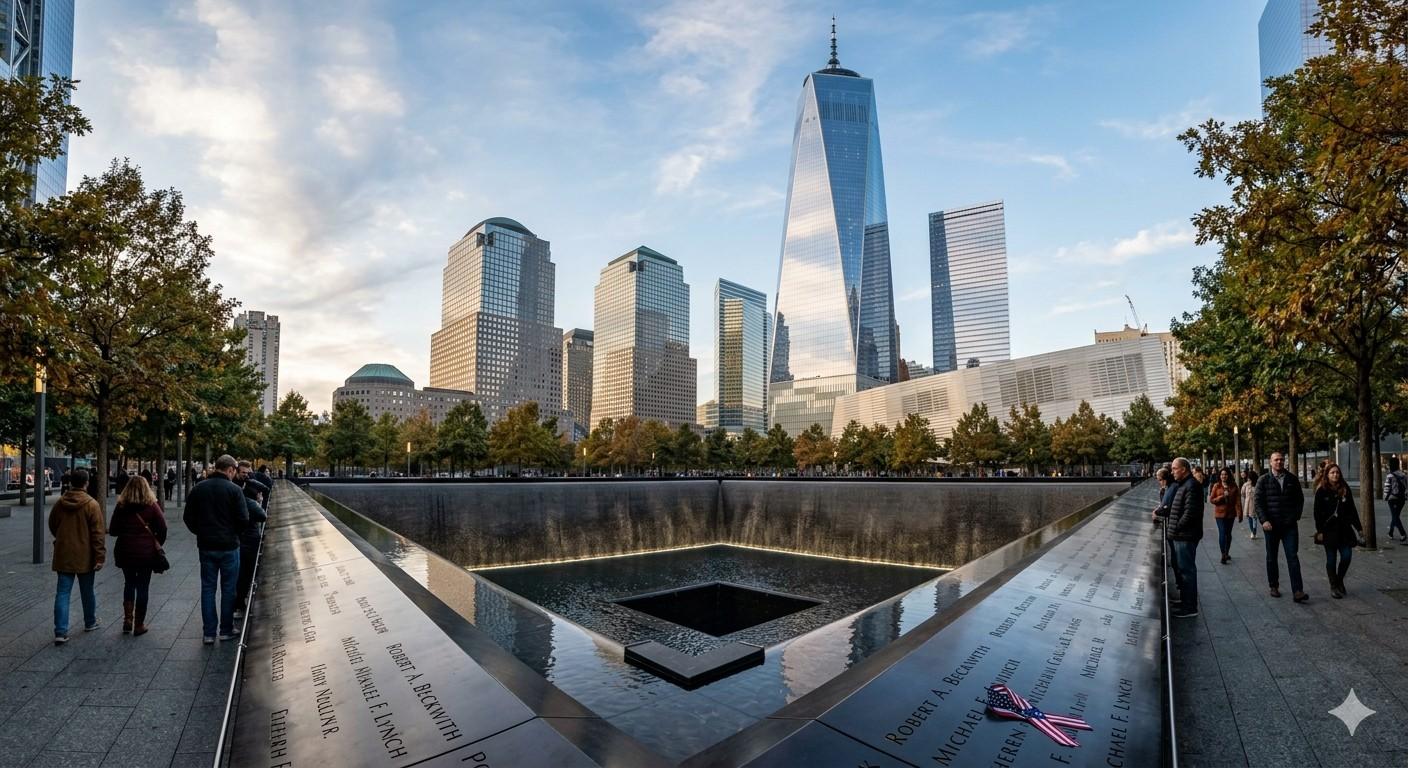
The 9/11 Memorial stands as one of the most powerful places of remembrance in the world. Located at the former World Trade Center site in Lower Manhattan, the memorial honors the nearly 3,000 people killed during the September 11 attacks in 2001 and the victims of the 1993 World Trade Center bombing.
For millions of visitors every year, the site is more than a landmark. It is a place for reflection, grief, resilience, and education. Whether you plan to visit New York City or simply want to understand the memorial’s deeper meaning, this guide covers everything you need to know, from the history and architecture to the emotional experience visitors often describe.
The memorial has become a global symbol of remembrance and hope, helping future generations understand the impact of one of the most significant events in modern history.
What Is the 9/11 Memorial?
The 9/11 Memorial is a public memorial located at Ground Zero, where the Twin Towers once stood before the terrorist attacks on September 11, 2001.
The memorial officially opened on September 11, 2011, exactly 10 years after the attacks. It was designed to honor the victims while creating a peaceful space for contemplation in the middle of busy Manhattan.
Today, the site includes:
- Two massive reflecting pools
- Bronze panels engraved with victims’ names
- The Survivor Tree
- The 9/11 Memorial Museum
- Memorial Glade for rescue and recovery workers
The memorial occupies roughly half of the 16-acre World Trade Center complex.
The History Behind the 9/11 Memorial
On September 11, 2001, four hijacked airplanes were used in coordinated terrorist attacks in the United States.
Two planes struck the North and South Towers of the World Trade Center in New York City. A third plane hit the Pentagon, while a fourth crashed in Pennsylvania after passengers attempted to regain control.
Nearly 3,000 people lost their lives. The attacks changed global politics, security systems, travel procedures, and the lives of millions worldwide.
The Design Competition
In 2003, an international competition was launched to create a permanent memorial at Ground Zero. More than 5,200 entries from 63 countries were submitted.
The winning design, called “Reflecting Absence,” was created by architect Michael Arad and landscape architect Peter Walker.
Their vision focused on memory, silence, and loss rather than traditional monument design.
The Reflecting Pools: The Heart of the 9/11 Memorial
Why the Pools Matter
The most recognizable feature of the 9/11 Memorial is the pair of enormous reflecting pools built directly within the footprints of the Twin Towers.
Each pool is nearly one acre in size and contains the largest man-made waterfalls in North America. Water flows continuously into a central void that never fills.
This design symbolizes absence and loss.
Many visitors say the sound of falling water creates a surprising sense of calm despite the emotional weight of the site.
Names Inscribed Around the Pools
The bronze parapets surrounding the pools contain the names of 2,983 victims from:
- The September 11 attacks
- The 1993 World Trade Center bombing
The names are not arranged alphabetically. Instead, they were carefully placed based on personal relationships, workplaces, friendships, and family requests.
This thoughtful arrangement gives the memorial a deeply human touch.
The Survivor Tree: A Symbol of Resilience
Among hundreds of swamp white oak trees stands one of the memorial’s most meaningful symbols, the Survivor Tree.
This Callery pear tree was discovered badly damaged in the rubble after the attacks. It was later rehabilitated and replanted at the memorial site.
Today, the Survivor Tree represents resilience, recovery, and hope after tragedy.
Visitors often stop here quietly, taking photos or simply reflecting on the meaning behind its survival.
Inside the 9/11 Memorial Museum
What You’ll See
The 9/11 Memorial Museum opened to the public in 2014 and sits beneath the memorial plaza.
The museum contains thousands of artifacts, recordings, photographs, and personal stories connected to the attacks.
Major exhibits include:
- Twisted steel from the Twin Towers
- Emergency vehicles used during rescue efforts
- Audio recordings from survivors and first responders
- Personal belongings recovered from Ground Zero
- Historical timelines of the attacks
- The “Last Column,” covered in tributes and messages
The museum combines history, architecture, and storytelling to create a deeply immersive experience.
Emotional Impact on Visitors
Many travelers describe the museum as emotionally overwhelming but essential.
Recent visitor experiences shared online frequently mention:
- The silence around the pools
- The emotional power of seeing victims’ names in person
- The respectful atmosphere maintained by the staff
- The importance of guided tours for historical context
For younger generations who did not personally remember 9/11, the museum often becomes a defining educational experience.
Visiting the 9/11 Memorial in 2026
Location
The memorial is located at:
180 Greenwich Street, New York, NY
It sits in Lower Manhattan near:
- One World Trade Center
- Oculus Transportation Hub
- Battery Park
- Wall Street
Memorial Hours
The outdoor memorial is generally open daily from 8 AM to 8 PM.
Museum hours may vary seasonally.
Ticket Information
- The outdoor memorial is free to visit.
- The museum requires paid admission.
- Guided tours and audio tours are available.
Booking tickets online in advance is strongly recommended, especially during September and the holiday season.
Best Time to Visit
Early mornings are often the quietest and most reflective times.
Some visitors specifically recommend arriving before large tourist crowds gather. Online accounts also praise the care and maintenance teams who clean and preserve the memorial daily.
Why the 9/11 Memorial Still Matters Today
More than two decades later, the 9/11 Memorial remains globally important for several reasons.
Preserving Historical Memory
For younger generations, the memorial helps explain the human impact of terrorism and the events that shaped the 21st century.
Honoring Victims and Families
The site ensures victims are remembered not as statistics but as individuals with names, stories, and loved ones.
Recognizing First Responders
The memorial also honors firefighters, police officers, paramedics, rescue workers, and volunteers who risked their lives during rescue and recovery operations.
The Memorial Glade specifically recognizes workers suffering from illnesses linked to toxic exposure after the attacks.
Symbolizing Resilience
The rebuilt World Trade Center complex, alongside the memorial, represents resilience and renewal after tragedy.
Lesser-Known Facts About the 9/11 Memorial
The Waterfalls Never Stop
The reflecting pools continuously circulate thousands of gallons of water every minute.
White Roses Mark Birthdays
Staff place white roses beside victims’ names on their birthdays, creating a touching personal tradition remembered by frequent visitors.
The Site Receives Millions of Visitors
People from more than 175 countries have visited the museum since opening.
It Took Years to Build
The planning and construction process lasted nearly a decade and involved architects, engineers, historians, survivors, and victims’ families.
Tips for First-Time Visitors
If you plan to visit the 9/11 Memorial, these tips can improve your experience:
Arrive Early
Morning visits tend to be quieter and less crowded.
Allow Enough Time
Many visitors underestimate how long they’ll spend at the museum. Plan for at least 2–4 hours.
Prepare Emotionally
The museum contains graphic and emotional material. Taking breaks during the visit is common.
Consider a Guided Tour
Guided tours provide historical insights and personal stories that many visitors find meaningful.
Be Respectful
Photography is allowed in many areas, but some exhibits prohibit photos out of respect for victims and families.
FAQs About the 9/11 Memorial
Is the 9/11 Memorial free?
Yes. The outdoor memorial plaza and reflecting pools are free to visit. The museum requires paid admission.
Where is the 9/11 Memorial located?
The memorial is located at the former World Trade Center site in Lower Manhattan, New York City.
How long does it take to visit the 9/11 Memorial Museum?
Most visitors spend between two and four hours exploring the museum.
Can you visit the 9/11 Memorial at night?
Yes. Evening visits are popular because the illuminated pools create a peaceful atmosphere.
What is the Survivor Tree?
The Survivor Tree is a Callery pear tree that survived the 9/11 attacks and was later restored and replanted at the memorial site.
Why are the names not alphabetical?
The names were arranged according to personal relationships, workplaces, and family requests to preserve meaningful connections among victims.
Conclusion
The 9/11 Memorial is far more than a tourist attraction. It is a living tribute to remembrance, resilience, and humanity.
From the reflecting pools and engraved names to the Survivor Tree and underground museum, every part of the site was created to honor those lost while educating future generations.
For visitors, the memorial offers something rare in a fast-moving city: a quiet place to pause, reflect, and remember.
Whether you are researching history, planning a visit, or seeking to understand the legacy of September 11, the 9/11 Memorial remains one of the most important and moving landmarks in the world.
